
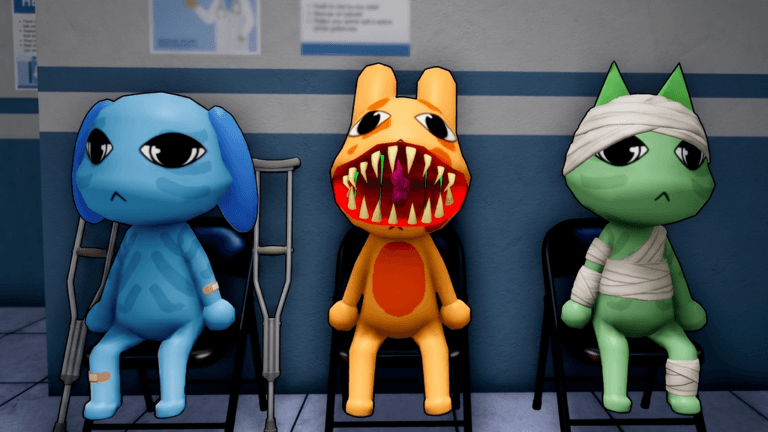
To play Animal Hospital Roblox, use one consistent check-in routine before deciding a suspicious case. Keep the patient decision separate from treatment, navigation, class and progression questions. When the routine reaches a detail it does not answer, move to the focused guide for that topic instead of guessing.
Frame the first decision
The first useful habit is completing one patient decision before branching into other systems. Keep every observation attached to the same case, and avoid substituting a remembered example for what the current case shows.
Learn the route as a sequence, not as a catalogue. Complete its ordered checks and send detailed topic questions to separate pages. That makes it possible to learn the basic decision without memorizing prices, room layouts, item tables or class lists at the same time.
Confirmed first-session workflow
Use this order for a suspicious patient:
| Step | Action |
|---|---|
| 1 | Pause at Check-In before admitting the patient. |
| 2 | Inspect the visible patient. |
| 3 | Compare the patient with the available photo. |
| 4 | Check CCTV. |
| 5 | Reject the patient when those checks identify an anomaly. |
| 6 | Watch and protect Sanity while the shift continues. |
Work through the sequence
Treat Steps 1–4 as inputs to one case. Do not clear a case after only part of that group, and do not carry an observation from a previous patient into the current decision. Step 5 is the outcome when the completed group produces the relevant result.
Step 6 runs alongside the patient route rather than acting as another case test. Check that state as play continues, but keep it conceptually separate from the observations used for admission.
If interrupted, resume from the first unfinished number. This preserves the order without adding a new test, item or location to the workflow.
Treatment, map, classes and shifts
Use the focused pages when the question moves beyond the inspection loop:
- Medicine and treatment for treatment-item questions.
- Hospital map for layout and route questions.
- Classes for role choices.
- Shifts for progression questions.
- Anomalies for the expanded patient-check discussion.
Use one of these links when the question changes from “What number comes next in the route?” to a topic-specific decision. The linked pages carry their own details so the first-session workflow does not need to absorb unrelated tables.
Uncertainty boundary
There is no confirmed mandatory treatment-item sequence for every beginner case. Do not convert the numbered patient route into an inventory recipe.
No exact recovery or loss value is confirmed as an effect of completing any patient-check step. Treat the current state as an independent concern.
Recover from a missed step
When the decision feels incomplete, ask which numbered input has not been finished. Return to that number rather than adding a class ability, room, shift condition or treatment item as an extra test.
If all listed inputs are complete but a topic-specific question remains, use the relevant focused link. The route ends after its listed steps; keep the uncertainty boundaries intact and hand the next question to the guide designed for it.
The anomaly identification guide is the next stop when the unresolved question concerns the case result itself.