
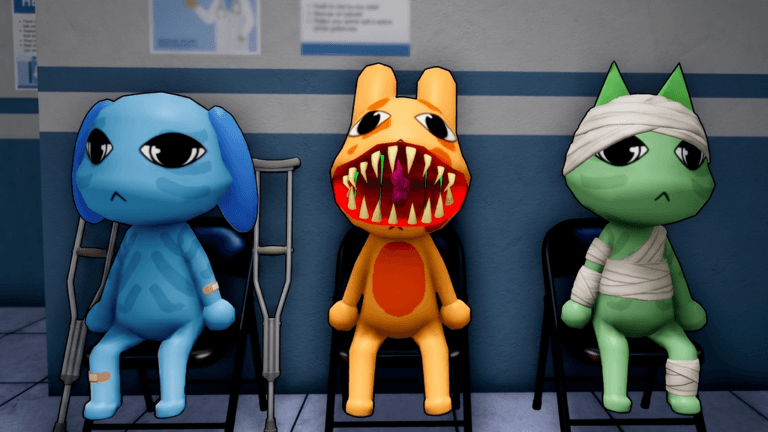
Animal Hospital uses more than one kind of abnormal encounter. Patient anomalies are judged through patient evidence, while the Stalker and Bed Monster have separate encounter rules. Classify the situation before choosing a response; an enemy or story event should not be counted as another suspicious patient.
Patient anomalies
A patient anomaly belongs to a patient case. Appearance, a developed photo and CCTV can each reveal a mismatch. Use How to Identify Anomalies for the ordered three-check walkthrough, conflict handling and inspection errors.
The important category boundary is the admission decision. Patient evidence determines whether the case should continue through the ordinary hospital flow; it does not describe how to handle every hostile event elsewhere in the building.
Other anomaly encounters
| Encounter type | Defining context | Dedicated guidance |
|---|---|---|
| Patient anomaly | Patient model, developed photo and CCTV | Identification steps |
| Stalker | Roaming encounter with its own warning and avoidance behavior | Stalker guide |
| Bed Monster | Special encounter associated with Maple Syrup and a red danger zone | Maple Syrup guide |
Story characters can also appear strange without becoming patient anomalies. Dialogue, quest objects and Journal entries belong to the character or story thread unless the game presents them as patient evidence.
Decision overview
First decide whether the event is a patient case, roaming threat, special monster or story interaction. Then open the guide for that category. This prevents a patient-checking rule from being applied to the Stalker or a Bed Monster counter from being treated as ordinary medicine.
The category can be determined by what the event asks the player to evaluate: admission evidence points to a patient case, a roaming warning points to the Stalker, and the red danger-zone encounter points to the Bed Monster.
Why labels change
Patient catalogues and encounter descriptions can change between updates. A fixed anomaly total can therefore become outdated even when the broader category boundaries remain useful.
Where to go next
Use the identification child page for an admission walkthrough, the Stalker page for its avoidance mechanic and the Maple Syrup page for the Bed Monster counter. The medicine guide owns ordinary diagnosis-to-treatment matching rather than anomaly classification.