
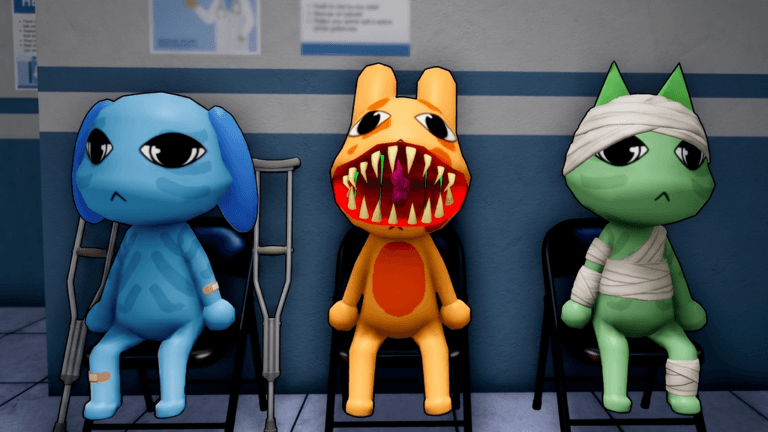
To identify anomalies in Animal Hospital Roblox, inspect the patient first, compare the developed photo second and check CCTV third. Complete all three checks before admission because a warning can appear in the model, reference image or camera view. Use the case in front of you instead of a memorized anomaly count.
The three inspection stages
| Check | Inspect | Decision value |
|---|---|---|
| Patient | Visible appearance | Finds an immediately noticeable mismatch |
| Photo | Developed patient image | Reveals a difference between the patient and reference |
| CCTV | Camera view or behavior | Adds information that may not be clear at reception |
The stages are complementary. A normal result in one does not erase a mismatch in another, and naming the stage makes a suspicious case easier to verify.
How to identify anomalies step by step
- Pause at the patient and inspect the visible model.
- Develop or open the patient photo for that case.
- Compare the patient with the reference image.
- Check CCTV for camera-based signs or behavior.
- Review all three observations before admission.
Use the same order for every patient. A repeatable sequence reduces skipped checks when the lobby is busy and makes it clear where a warning first appeared.
Handle conflicting checks
If one stage looks suspicious while the others appear normal, pause the admission and repeat the unclear comparison. Name appearance, photo or CCTV as the source of concern, then recheck that same evidence instead of replacing it with a vague claim that the patient “looks wrong.”
If the disagreement remains, restart the sequence from the patient model. A fixed routine is safer than forcing one ambiguous frame into a confident decision.
Version-sensitive anomaly lists
Individual anomaly catalogues can change after updates. The three-stage method still works when a model, photo or camera behavior changes because it compares the evidence presented in that run.
Common inspection mistakes
- Stopping after the visible patient check.
- Treating the developed photo as optional.
- Skipping CCTV when the lobby is busy.
- Using an old catalogue as the admission decision.
- Reporting suspicion without naming the check that caused it.
The anomaly overview distinguishes patient cases from the Stalker and Bed Monster. The beginner guide places this inspection sequence inside the wider first-session loop.